
In older patients, the clock ticks faster
We all know that timing matters in nerve surgery. Numbers help bring that home.
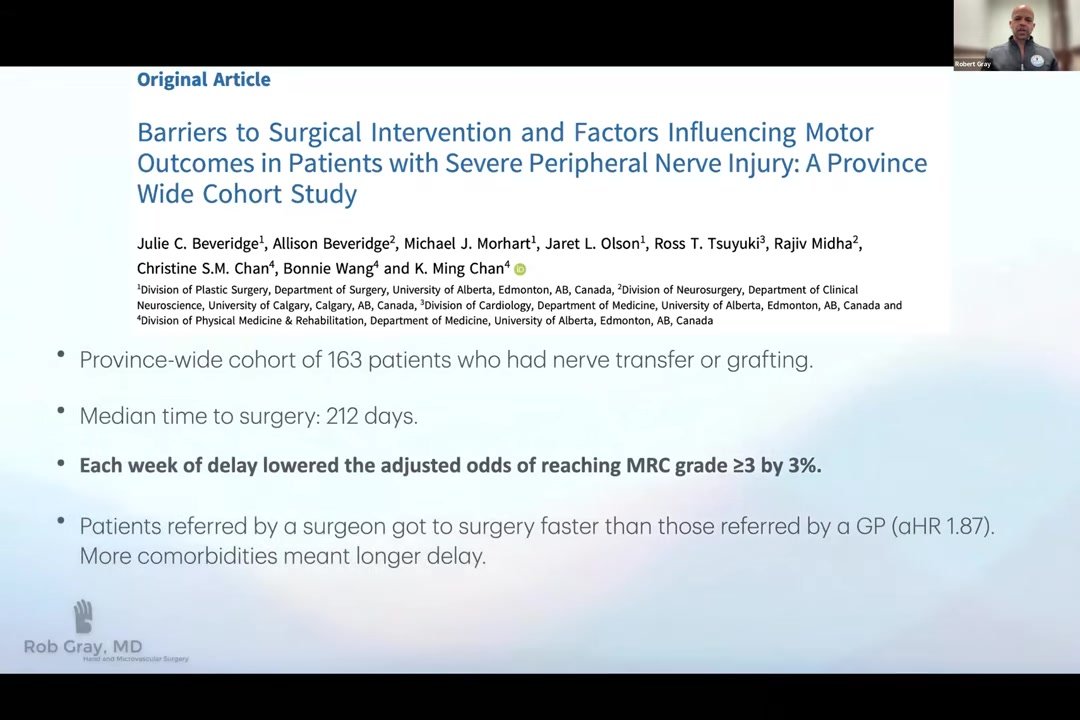
On an AAHS webinar in November I showed a province-wide cohort of patients who ultimately needed a nerve transfer or a graft. The slide below shows the size of that cohort, the median time to surgery, and what each week of delay did to the adjusted odds of reaching MRC grade ≥3. That is not a wait for the injury to declare itself. That is time spent getting to the person who can actually do the work.
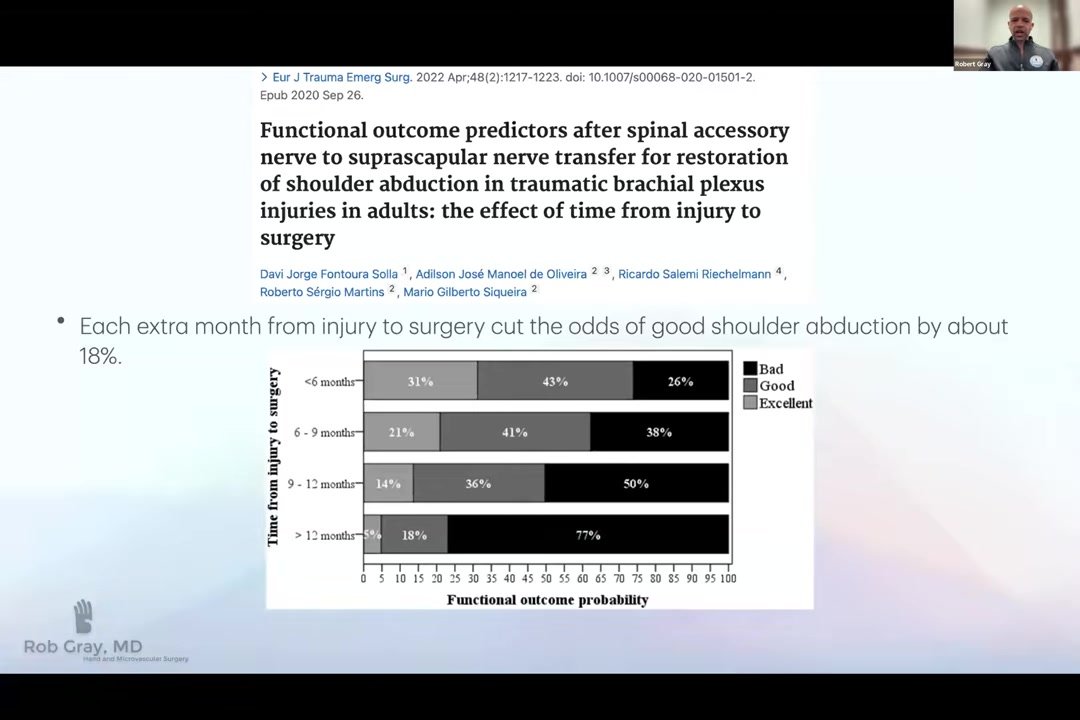
Nerve transfers do not make us exempt. In a study of spinal accessory–to–suprascapular transfers for shoulder abduction, the slide below shows what each extra month from injury to surgery did to the odds of a good result. That is with a transfer, not even a repair. Getting in earlier is better.
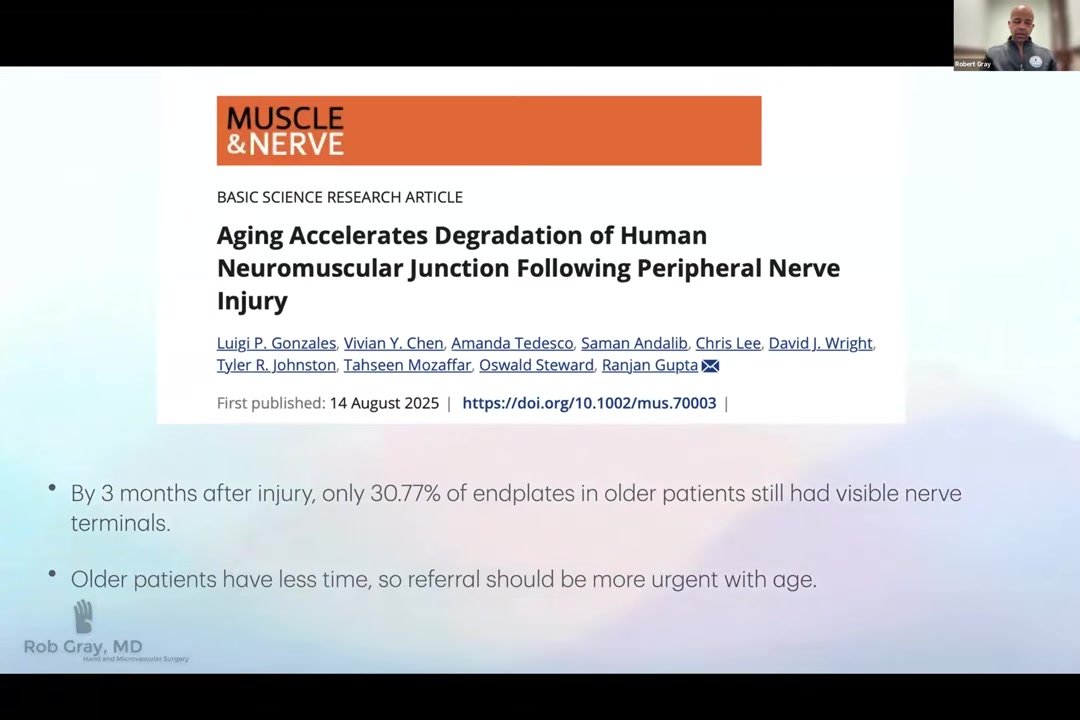
In older patients, the clock ticks faster. Degeneration happens faster. End plates atrophy faster. The slide below, from the paper I showed, has the endplate finding in older patients. The slide’s conclusion is the one I use in practice: older patients have less time, so referral should be more urgent with age.
I think overall we overdo watching and waiting for a lot of these injuries. There is a place for observation. A neurapraxia can be watched — ideally by a nerve surgeon, not from a distance. But “give it three to six months and see” is a habit that costs people muscle they will not get back, and it costs older patients sooner than it costs younger ones. When the story and the exam say the nerve may need to be looked at, it is important to get that person in early: to fix what needs fixing, or at least to explore.
This is also why I am impatient with a workup that has to be complete before the referral is placed. The history and the physical are the most important part of the workup, and those exams change. Studies can run in parallel. They should not be the reason a 70-year-old with a motor deficit is still on a waiting list at month four.
If you are sitting with an older patient who has a nerve injury, the question is not whether they can tolerate a little more time. The question is how much of the muscle is still there to come back to. The clock is already running, and in that patient it is running faster.
Watch this segment from the AAHS webinar Managing Nerve Injuries in 2026: How Treatment Decisions Have Evolved, November 17, 2026.